Alabama was once the top state for opioid prescriptions. Now numbers are dropping, but there’s a long way to go
-
- Updated
- WVUA23 Article Link

Starting in the 1990s, people going to the doctor seeking relief for pain were often prescribed opioids, with few questions asked.
Prescription rates for opioids began to rise as medical professionals recognized new therapies for pain management. That, combined with a false belief that patients were not at risk for opioid use disorder, led to a major increase in opioid addiction around the country.
“These are people who started using it by prescription, right? “So these are pain medications that were given to people. As they were using it, it led to the opioid crisis now,” said Tongi Mugoya, associate professor of rehabilitation counseling and program coordinator of the University of Alabama’s Counselor Education Program.
Before the 1990s, most people fighting an opioid addiction got hooked on illegal drugs like heroin. But as pharmaceutical companies touted the benefits of prescribed opioids for pain management, more and more people who relied on these drugs to live with their pain wound up incapable of living without the opioids.
A research report published by the National Institute on Drug Abuse found that 80% of people who began using opioids in the 1960s started with heroin. But 75% of people using opioids in the 2000s said their first was a prescription drug. It was often easy. Walk into a doctor’s office. Say you’re in pain. Walk out with a prescription.
As more and more people got hooked on prescription opioids, the federal government began cracking down, with the late 2010s bringing new guidelines for doctors prescribing opioids. It did cut down on the amount of opioids being prescribed, but that didn’t help those who were addicted and found themselves cut off from their supply. Many wound up seeking alternatives from the streets, which came with its own problems.
“People are getting these medications,” Mugoya said. “If they are not available, then we start seeing other opioids coming into the market, right?”
Fentanyl, a synthetic opioid 50 to 100 times more potent than morphine, was approved by the Food and Drug Administration in 1998 as a pain reliever for cancer patients experiencing breakthrough pain. It came onto the illegal opioid market in the early 2010s, and since then has become widely available.
“Thirty years ago it was not available, at least not in its current iteration,” said Phoenix House Executive Director Jon Tyler. “Now it’s easily accessible. It’s cheaper a lot of times than opioid pills and even, to a certain degree, heroin.”
Illegal drug manufacturers began purchasing fentanyl from compounding laboratories overseas and added it into other substances like heroin as a low-cost way to boost users’ highs. Because it’s so potent, it’s easier than ever for illegal drug users to wind up overdosing even if they think they’ve taken an appropriate amount.
And not everyone who overdoses on fentanyl knows it’s in their system. Mixing fentanyl with other illicit drugs is a common tactic used by drug distributors to increase the potency. It’s often sold as a powder or nasal spray and pressed into pills made to look like a prescription opioid.
A U.S. Centers for Disease Control and Prevention report found that about 69% of all drug overdose deaths in 2023 involved synthetic opioids of some kind, with the most-often culprit being fentanyl. Part of those deaths involved solely synthetic opioids, but others include drugs it has been mixed into, with or without the person’s knowledge. The report also found fentanyl-caused nonfatal and fatal overdoses have increased in the past decade as the drug’s popularity rises.
Data found in the 2023 Alabama Opioid Overdose and Addiction Council report found that out of the 981 overdose deaths caused by opioids in 2021, 830 of them — 70% — involved fentanyl.
According to the CDC, from 1999 to 2023, about 806,000 people have died from an overdose involving opioids. Of those, 308,000 deaths involved prescription opioids. The fight against the crisis is far from over, but data from the CDC found that 2023 marked the first annual decline in the number of opioid-related deaths since 2018.
During the peak of the opioid crisis in 2012, Alabama had the highest rate of opioid prescriptions in the country. In fact, there more more opioid prescriptions than there were residents in the state.
“(Alabama’s) prescription rate was around 143.8 prescriptions per 100 people,” Mugoya said. “Nationally it was 81.3. So Alabama had a very high number of opioid prescriptions.”
Alabama is seeing some improvement in the opioid prescription rate, Mugoya said, going from 143.8 in 2012 down to 68.5 in 2024. That said, Alabama is currently the second-highest prescriber of opioids, right behind the 68.8 rate in Arkansas, according to data from the CDC.
So what are the driving forces behind the decline in overdose deaths?
“One of the most significant things that’s happened was that naloxone was made available, not only in hospitals but to emergency responders,” Mugoya said. “Even families had the opportunity to get naloxone.”
Naloxone is a life-saving medication that, when administered, attaches to opioid receptors in the brain and reverses the effects of an opioid overdose. The medicine comes in an easy-to-use spray that anyone, regardless of medical knowledge, can use to save a life. For a step-by-step guide on how to administer naloxone, the New York State Department of Health has released illustrated instructions. Mugoya said the immediate concern of death was reduced, and people started looking into ways to further assist people suffering from addiction.
Medications for opioid use disorder work as an FDA-approved effective treatment that relieves opioid cravings and alleviates withdrawal symptoms. Even with the means to treat opioid addiction, the National Institute on Drug Abuse released a study finding that in 2021 only one in five people with an opioid addiction received medication to treat it.
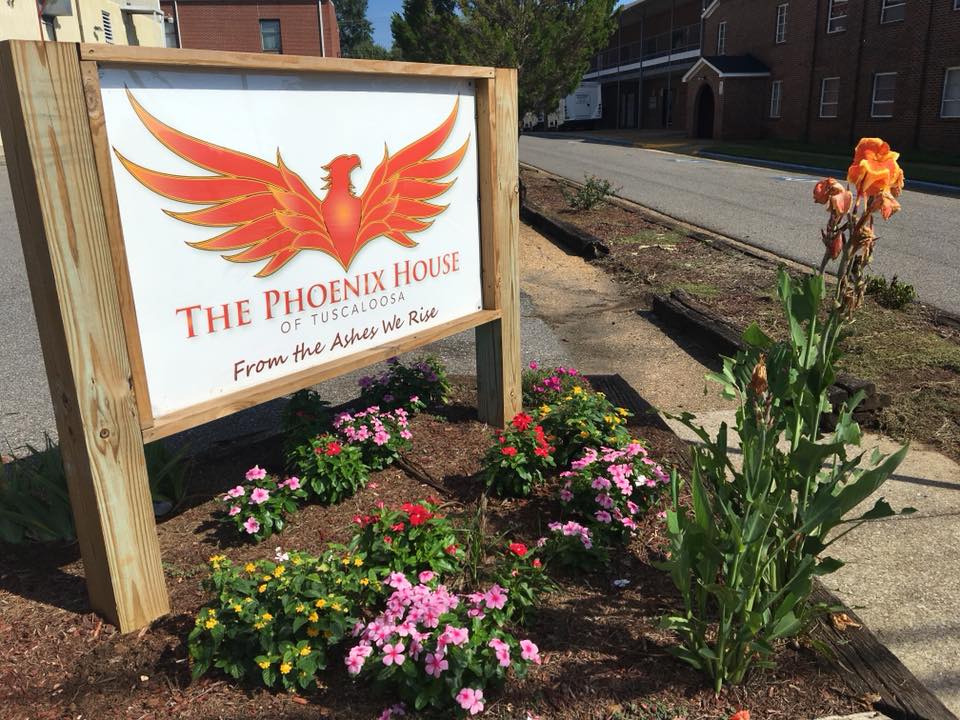
Another major result from the opioid crisis was a series of lawsuits filed by federal, state and local governments against pharmaceutical manufacturers, chains and drug distributors. The lawsuits have resulted in billions of dollars collected for states and local initiatives against opioid abuse, with beneficiaries including organizations in Tuscaloosa. Among the recipients was Phoenix House, a residential treatment facility for drug use.
“The phoenix rises from the ashes,” Tyler said. “Someone whose life is broken, someone whose life has burned up because of substance abuse issues. We want to provide a safe, secure environment.”
Tyler isn’t a stranger to the problems of those relying on Phoenix House for help. In fact, he was one of them in 2005. Phoenix House gave him what he needed when he was at his lowest, and he’s thankful every day he can pay that forward.
“They gave me a place to stay,” he said. “They gave me an anchor to the everyday community, which I had fallen out of due to negative behavior behind substance abuse.”
For many people entering Phoenix House, substance abuse may have caused them to lose their home or get involved in some sort of crime, and now they’re seeking to reenter the community. Getting a job, housing and participating in the recovery program are the first steps Phoenix House helps clients accomplish in their effort to beat back addiction.
“The No. 1 factor, I truly believe, is to have treatment available,” Tyler said. “Because there are people who recover. To us, having the option is the most important thing, just having the doors open.”
The broader collaboration with initiatives aimed at fighting the crisis, like Phoenix House, with hospitals, law enforcement and localities has resulted in what Mugoya said is a destigmatization of opioid use. Educating others about what opioid addiction is and the factors that can lead a person down that route makes a difference in how people suffering from addiction are treated.
“Most people who are addicts feel like they’re left behind,” Mugoya said. “They’re looked at as criminals, people who are doing something bad, but when it has been destigmatized and people are seeing that if they are having a problem, there is a system.”
The difference in how recovery patients are treated creates an environment where they’re more likely to come forward and ask for help, leading to more people receiving treatment. Mugoya said he’s seen people who have recovered from addiction come forward and assist others undergoing recovery.
“They are able to have people who have gone through the process talk to these people about what it means to go through the process and also have these people who are in recovery can see are doing very well,” Mugoya said.